Pool Health Is More Than Clean Water.
Crystal-clear water doesn't always mean healthy water. Here's what could be hiding in your pool—and what to do about it.
Clear Water. Hidden Danger.
Pool water can look perfect and still make your family sick. Bacteria don't change the color of the water. pH imbalance doesn't have a smell. Sacramento's summer heat accelerates every one of these risks — a pool that tested clean on Monday can be dangerous by Friday.
What's Living in Your Pool
These bacteria thrive in poorly maintained pools. Unlike algae, you can't see them — but your family can feel them.
E. coli
High RiskEnters pools through fecal contamination and becomes dangerous when chlorine dips below 1 ppm.
- ▸ Severe stomach cramps and diarrhea
- ▸ Vomiting — especially in children under 5
- ▸ Can progress to kidney failure in vulnerable swimmers
Swimmer's Ear Bacteria (Pseudomonas)
High RiskThe leading cause of swimmer's ear and pool rash — survives even at normal chlorine levels when pH drifts.
- ▸ Ear pain, itching, and discharge
- ▸ Skin rash and folliculitis (bumpy, itchy skin)
- ▸ Forms biofilm on pool surfaces that's hard to kill
Chlorine-Resistant Parasites (Cryptosporidium)
High RiskSurvives for days in properly chlorinated water — standard treatment doesn't stop it.
- ▸ Prolonged diarrhea lasting 1–3 weeks
- ▸ Stomach cramping and nausea
- ▸ Spreads rapidly — one swimmer can contaminate the whole pool
Algae Bloom
Moderate RiskIn Sacramento's summer heat, algae can go from invisible to a full bloom in under 48 hours.
- ▸ Signals severely depleted chlorine — bacteria can follow
- ▸ Makes surfaces dangerously slippery
- ▸ Black algae harbors bacteria in deep roots — hard to eradicate
The Chemical Balance Problem
Most pool problems begin with water chemistry. Even a small drift in any of these key readings can make your pool unsafe — often before there are visible signs.
DIY test strips miss most of this. Professional digital testing catches what matters.
Recognize Pool-Related Illness
If anyone in your family experiences these symptoms after swimming, your water may be the cause — not a summer cold.
Immediate Reactions
- Red or burning eyes
- Skin rash or irritation
- Ear pain or discharge
- Throat or nose irritation
24–72 Hours Later
- Nausea or vomiting
- Diarrhea
- Fever or chills
- Respiratory symptoms
If symptoms appear after swimming, consult a healthcare provider and have your pool tested immediately. Don't guess — test.
How We Protect Your Family
Every risk above is preventable. Here's exactly what we do about each one — on every single visit.
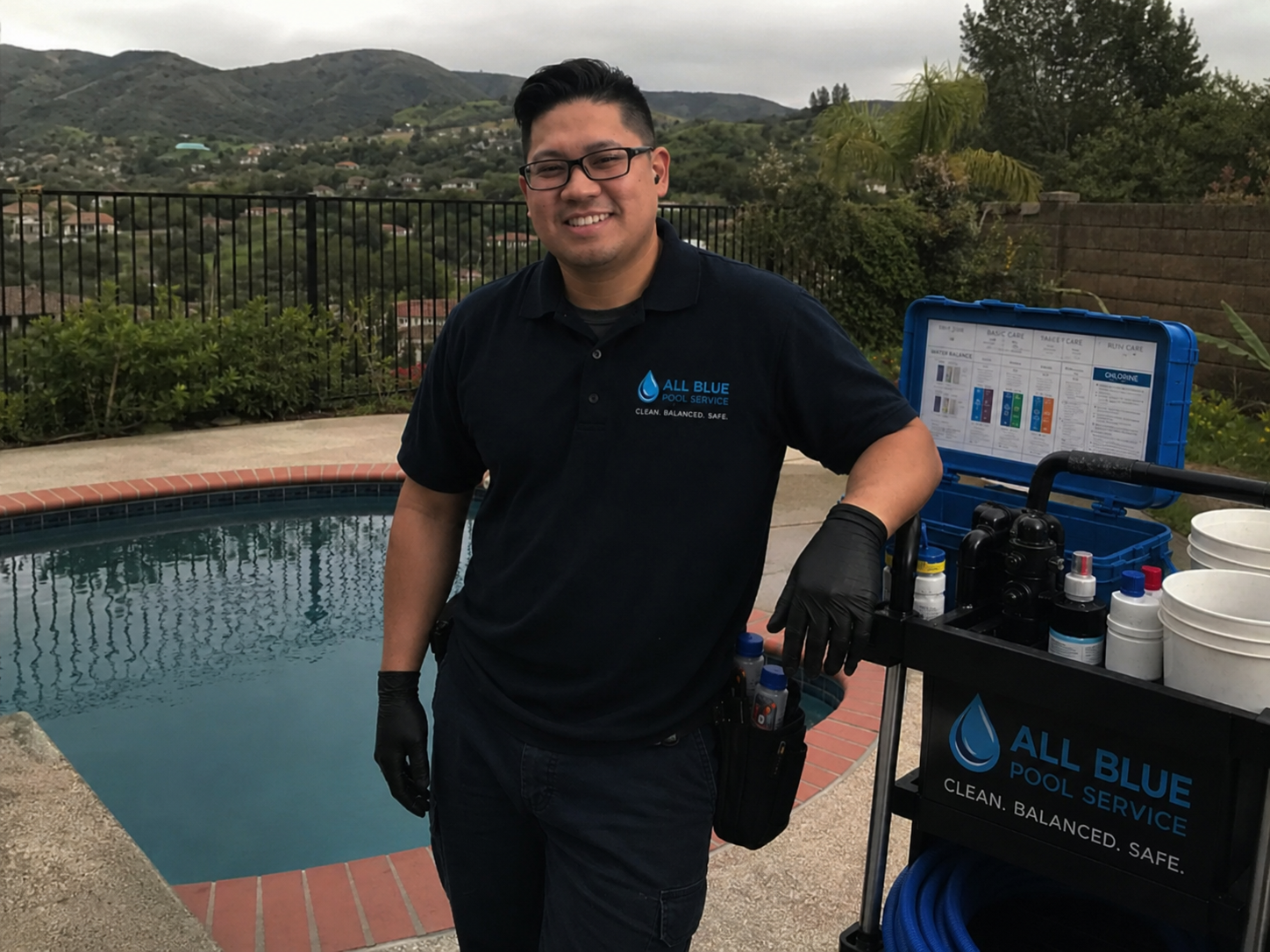
Professional-Grade Water Testing
We monitor pH, alkalinity, and chlorine every visit. When readings drift, we go deeper. A complete water panel is performed at the start and end of every season and on every first visit.
CPO-Certified Technician on Every Visit
Not a general handyman. Not a rotating subcontractor. Every technician is CPO certified and trained in professional pool health and water safety.
Weekly Pool Health Report
Every visit is documented with chemical readings, service notes, and photos—delivered within 2 hours.
Early Detection
We catch early algae, rising stabilizer, and equipment issues before they turn into bigger problems.
Pool Health FAQ
Answers to the questions Sacramento families ask most about pool water safety.
Yes — and it's one of the biggest misconceptions about pool safety. Bacteria, parasites, and chemical imbalances are invisible to the naked eye. Crystal-clear water only tells you the water looks clean — not that it's safe. Professional testing detects what your eyes can't see.
Weekly professional testing is recommended for most residential pools. Sacramento's summer heat can change pool water chemistry in just a few days, even if the water still looks clear. Regular testing helps keep your pool water properly balanced, reducing the risk of algae, bacteria, skin and eye irritation, and premature equipment damage.
Not usually. Eye irritation is more often caused by poor water balance or chloramines — compounds that form when chlorine reacts with sweat, body oils, and other contaminants. That familiar "chlorine smell" at public pools? That's usually chloramines, not excess chlorine. A properly balanced pool with healthy chlorine levels should leave you enjoying the water — not rubbing your eyes afterward.
No. While chlorine is highly effective against most harmful bacteria and microorganisms, some pathogens are much more resistant. Cryptosporidium, a common waterborne parasite, can survive for up to 10 days even in properly chlorinated water. That's why healthy pool water depends on proper chemical balance, effective filtration and water circulation, and ongoing professional testing — not chlorine alone.
Free chlorine is the sanitizer that actively kills bacteria and harmful microorganisms in your pool. Total chlorine includes both free chlorine and combined chlorine — the portion that has already reacted with contaminants and is much less effective. A pool can appear to have enough chlorine while still lacking the free chlorine needed to keep the water properly sanitized. That's why professional testing looks beyond a single chlorine reading to ensure your water is truly safe — not just clear.
Cyanuric acid (CYA), also called stabilizer, protects chlorine from being broken down by the sun. Without enough CYA, Sacramento's summer sun can quickly reduce your chlorine levels. For most residential pools, 30–50 ppm provides effective UV protection while allowing chlorine to sanitize efficiently. When CYA becomes too high, chlorine becomes less effective and water quality becomes harder to maintain. That's why we monitor stabilizer levels at key points throughout the season — not just when problems appear.
It depends on the cause. Eye irritation, skin rashes, and swimmer's ear can appear within minutes to a few days after swimming. Gastrointestinal illnesses caused by bacteria or parasites may not develop for several days. This delay is one reason many families never connect an illness to their pool. If multiple family members develop similar symptoms after swimming, it's worth having your pool water professionally tested — even if the water looks perfectly clear.
If you or a family member experiences severe or persistent symptoms after swimming, consult a healthcare provider. If multiple people become ill after using the pool, stop swimming and have the water professionally tested before using it again.